

Making the Team
The Uncanny Parallels Between the Dallas Cowboys Cheerleaders and High Control Religion

Despite growing up in a high control religion, I was a cheerleader. It was the closest way I could get to being a dancer, since dance was considered too provocative and seductive. I convinced my parents that cheerleading was athletic dance and moreover it was about cheering for a team. I liked that aspect too…my friends and siblings were starting athletes in football and basketball; being a cheerleader meant I got to go to all the games and got a front row seat. Our coaches made us hit the weight room with the wrestlers, run with the cross country runners, and learn about the sports we were cheering for. We learned cheers, chants, stunts, and yes, we danced. I loved it.
I was a cheerleader from 7th grade through my senior year in high school. Though we didn’t have captains, I assumed that role for multiple years. I took my role and identity as a cheerleader seriously, as did all of my teammates. None of us wanted to be “stereotypical” cheerleaders—so we paid attention to how we presented ourselves in all ways. I probably have my religious upbringing to thank for keeping me on the straight and narrow, concerned with others’ perceptions, and keeping up appearances, but cheerleading definitely helped.
***
Whenever a cheerleading documentary comes out, it’s on the top of my list to watch. I’m quickly swept back 25+ years to Jock Jams blasting, 8-count dance patterns and smiling at the screen. As soon as the new Netflix documentary, America’s Sweethearts: Dallas Cowboys Cheerleaders, I was ready to watch.
Back in my fundie days when I would house sit for families that had cable TV I would sneak and binge watch episodes of Dallas Cowboys Cheerleaders: Making the Team (which began airing in 2006). I was fascinated with the inner workings of the DCC. In my late teens and early 20’s I was friends with a former Minnesota Vikings cheerleader who told me some not-so-rosey stories of what it was like to be a professional football team cheerleader—but the DCC cheerleaders seemed to be a different caliber.
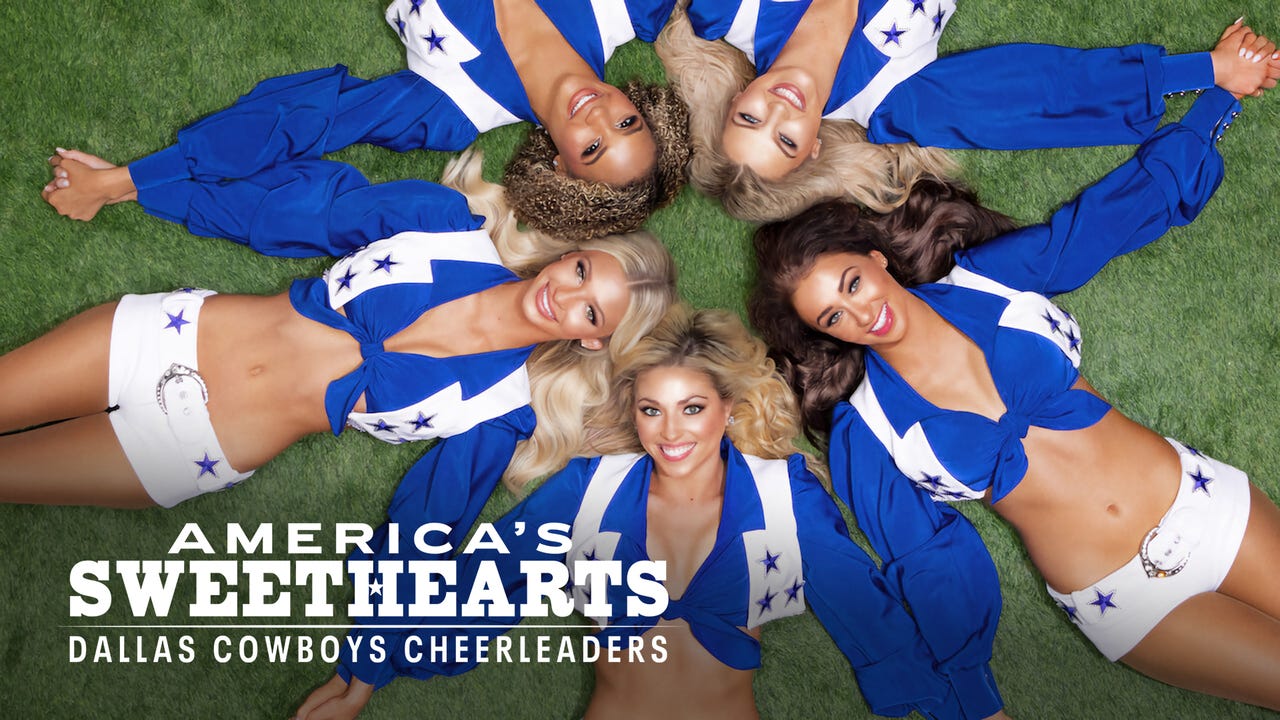
But now, nearly two decades later, post-religion and fundamentalism, keenly aware of dynamics of power and control, and having lived in the culture of the south for nearly 15 years, I see things from a very different viewpoint. The DCC are required to present a specific image everywhere they go, they are a part of an elite group, they are a sisterhood, they find their identity in being a DCC, they are overworked and underpaid—but are told to consider it an honor. Their emotional and physical suffering is often glorified and for many of them, after their tenure of being a DCC, they are unsure of who they are because their entire identity was a DCC.
Surely I’m not saying that the Dallas Cowboy Cheerleaders are on par with a high control religion or a cult. Or am I?
